
Easter is one of the most important celebrations in Christianity, but the way people observe it varies widely from country to country. Religious services, processions, traditional foods, decorated eggs, family gatherings, and community festivals all play different roles depending on local culture.
Exploring Easter Traditions Around the World shows how a shared religious celebration can develop unique customs in different communities. From Spain’s famous Holy Week processions to Greece’s communal Easter feast and the United States’ historic Easter Egg Roll, Easter offers a fascinating look at religion, history, food, and family life.
What Are Easter Traditions Around the World?
For Christians, Easter commemorates the resurrection of Jesus Christ following his crucifixion. The celebration comes after Holy Week, which includes important observances such as Good Friday and Holy Saturday.
Although the central Christian meaning remains consistent, individual communities have developed their own ways of marking the occasion. Religious ceremonies may be combined with traditional meals, music, processions, children’s activities, and public festivals.
How Easter Traditions Differ Across Countries
There is no single way to celebrate Easter worldwide. In Spain, Holy Week is known for elaborate religious processions and religious brotherhoods. Italy has regional festivals and ceremonies, while Greece has distinctive Easter food and community traditions.
In the United States, egg hunts and the White House Easter Egg Roll are familiar examples of Easter activities. These differences demonstrate how religion can interact with local history and culture to create distinctive celebrations.
Religious and Cultural Meaning of Easter
Many Easter customs have both religious and cultural dimensions. Church services focus on Christian beliefs about the resurrection, while foods, decorations, music, and community events often reflect local traditions.
Eggs are particularly recognizable Easter symbols, while traditional meals can connect the holiday with family history. Looking at both aspects helps explain why Easter Traditions Around the World are so diverse.
Easter Traditions in Europe
Italian Easter traditions vary significantly between regions. Italy’s official tourism website describes celebrations involving Easter eggs, religious processions, local foods, festivals, and customs that can differ from one part of the country to another.
One famous example is Florence’s Scoppio del Carro, or “Explosion of the Cart.” A decorated cart is positioned near Florence Cathedral on Easter Sunday, and a mechanical dove traditionally travels from the cathedral toward the cart to ignite a fireworks display.
Easter Traditions in Spain
Spain is especially famous for Semana Santa, or Holy Week. Many cities and towns hold processions featuring religious images, music, flowers, and members of religious brotherhoods. Seville is one of the best-known destinations for these celebrations, while other cities have developed their own distinctive traditions.
Easter Traditions in Greece
Greek Easter traditions combine Orthodox Christian worship with family and community celebrations. In Livadia, for example, Holy Week includes the preparation of red-dyed eggs, Good Friday observances, and a communal Easter feast.
Easter Traditions in the United Kingdom
In the United Kingdom, Easter traditions include church services, Easter eggs, family activities, and seasonal foods. Hot cross buns are particularly associated with Good Friday. British Easter customs can also vary by region. Historic England notes that some English Easter traditions have long histories and contain elements of both Christian and older folk customs.
Easter Traditions in Germany
Germany has several Easter customs involving decorated eggs, Easter nests, seasonal decorations, and Easter fires. Some communities decorate public fountains with eggs and other decorations, while Easter bonfires are observed in certain regions.
Easter Traditions in North and South America
American Easter celebrations combine religious observances with family activities. Churches hold Easter Sunday services, while families may organize egg hunts, meals, and other activities for children.
Easter Traditions in Mexico
Mexico’s Easter season is strongly associated with Semana Santa. Religious ceremonies and processions are held in many communities, with local celebrations reflecting regional customs.
Easter Traditions in Brazil
Brazil has significant Holy Week celebrations, particularly in communities with Catholic traditions. Religious services, processions, Passion-related performances, and community events can form part of the Easter period.
Easter Traditions in Canada
Canadian Easter celebrations vary among religious and cultural communities. Church services, family gatherings, Easter eggs, chocolate, and children’s activities are common features of modern celebrations.
Easter Traditions Around the World in Asia
The Philippines has some of the most distinctive Holy Week and Easter practices in Asia. Catholic communities observe Holy Week through religious services, processions, prayer, and other traditions. One notable Easter practice is Salubong, a symbolic meeting associated with the risen Christ and Mary. Easter Sunday marks the joyful culmination of Holy Week and is widely observed as a celebration of Christ’s resurrection.
Easter Traditions in India
Easter celebrations in India vary according to Christian denomination, region, and local culture. Christian communities may attend special church services, participate in Holy Week observances, and gather with family for meals.
Easter Traditions in Other Asian Countries
Christian communities in different parts of Asia observe Easter in different ways. In some places, celebrations are centered mainly around churches and religious communities, while others have more visible public ceremonies.
Easter Traditions Around the World in Africa and Oceania
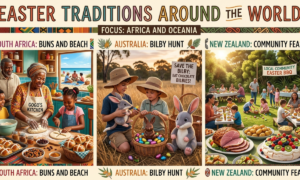
Easter, known as Fasika, is especially important within Ethiopian Orthodox Christianity. The Easter period follows an extended fasting season and includes significant religious observances.
Easter Traditions in South Africa
South African Easter celebrations reflect the country’s religious and cultural diversity. Christian communities may attend church services, participate in worship, and spend time with family during the Easter holiday.
Easter Traditions in Australia
Australian Easter traditions commonly include church services, family gatherings, chocolate eggs, and children’s activities. Because Australia is in the Southern Hemisphere, Easter takes place during autumn rather than spring.
Easter Traditions in New Zealand
New Zealand Easter celebrations include Christian worship, family activities, Easter treats, and community events. The holiday period also provides an opportunity for families to spend time together.
Popular Easter Traditions Around the World
Easter eggs are among the most familiar symbols associated with the holiday. Decorated eggs, chocolate eggs, egg rolling, and egg hunts appear in different forms across many communities. The United States provides a particularly well-documented example through the White House Easter Egg Roll.
Easter Parades and Processions
Religious processions are an important part of Easter in many communities. Spain’s Semana Santa is one of the world’s most recognizable examples, with religious brotherhoods accompanying elaborate images through city streets.
Traditional Easter Foods
Food is another major feature of Easter Traditions Around the World. Greek celebrations in Livadia, for example, include communal lamb roasting, while Spain has traditional Easter sweets such as torrijas and mona de Pascua.
Church Services and Religious Observances
For Christians, worship remains at the heart of Easter. Churches may hold services throughout Holy Week and especially on Easter Sunday. The exact form of worship differs among Christian denominations and countries, but the resurrection of Jesus is the central religious focus. Public processions, prayer, music, scripture readings, and church gatherings can all be part of the Easter period.
Family Gatherings and Easter Gifts
Easter is also a time when many families gather for meals and activities. Children may receive chocolate eggs or other Easter treats, while relatives may prepare traditional foods together. Some customs are particularly focused on children. The White House Easter Egg Roll, for example, has historically centered on children’s games and activities.
Unique Easter Traditions Around the World
Traditional Easter foods can reveal a great deal about local culture. Greek communal lamb roasting is one example, while Spanish Easter cuisine includes a wide selection of regional sweets and savory dishes. These foods often connect the holiday with local ingredients, family recipes, and religious customs. They also make Easter an opportunity to experience regional culture through food.
Traditional Easter Festivals
Some Easter customs have grown into major public festivals. Florence’s Scoppio del Carro is a striking example, combining a historic religious tradition with a dramatic fireworks display. Spain’s Semana Santa is another major example, with processions and religious ceremonies attracting large crowds.
Unique Easter Games and Activities
Egg-related games are among the most recognizable Easter activities. Egg hunts, decorating, and egg rolling can provide simple ways for children and families to participate. The White House Easter Egg Roll has included egg rolling and other activities throughout its history. Some early versions even featured games such as egg ball and egg croquet.
Customs That May Surprise Visitors
Travelers may be surprised by how different Easter can feel from one country to another. A visitor expecting chocolate eggs might instead encounter solemn processions, communal cooking, traditional religious ceremonies, or large public festivals.
How Easter Traditions Reflect Local Culture
History has played an important role in shaping Easter customs. Some traditions have been practiced for generations and have become part of a community’s cultural heritage. Italy’s regional Easter customs and Spain’s long-established Holy Week processions demonstrate how religious observance can develop into distinctive local traditions over time.
The Role of Family and Community
Family and community participation is a recurring theme across Easter Traditions Around the World. In Greece, people gather around communal Easter cooking, while in Spain and Italy, public processions bring communities together.
Local Foods and Easter Celebrations
Food provides one of the clearest links between Easter and local culture. Spanish torrijas, Greek Easter lamb, and Italian regional dishes show how local recipes can become closely associated with the holiday.
How Easter Traditions Are Changing Today
Modern Easter celebrations often combine traditional religious practices with newer family and entertainment customs. Chocolate eggs, organized egg hunts, decorations, and public events can exist alongside church services and traditional meals.
The Influence of Globalization
Global travel, international media, and commerce have helped familiar Easter symbols spread across borders. Chocolate eggs, Easter decorations, and children’s activities can now be found in many places outside their original cultural settings.
Preserving Traditional Easter Practices
Traditional Easter customs survive when communities continue to practice and pass them to younger generations. Religious ceremonies, processions, traditional foods, festivals, and family activities all contribute to this process.
Conclusion
Easter Traditions Around the World show how one important Christian celebration can take many different forms across cultures. From Spain’s Holy Week processions and Italy’s regional festivals to Greece’s traditional Easter meals, the Philippines’ religious observances, and the United States’ Easter Egg Roll, each country brings its own customs and cultural character to the holiday.
Although celebrations differ in food, activities, music, and religious practices, many share common themes of faith, family, community, and celebration.
FAQs
What are Easter Traditions Around the World?
Easter traditions vary by country and may include religious services, processions, special foods, egg decorating, and family gatherings.
Which country has unique Easter traditions?
Spain, Greece, Italy, the Philippines, and Germany are known for distinctive Easter customs that reflect their local cultures and religious practices.
Why are Easter eggs popular around the world?
Easter eggs are widely associated with new life and renewal and have become a familiar symbol of Easter celebrations.
What foods are traditionally eaten at Easter?
Traditional Easter foods differ by country and can include lamb, special breads, cakes, sweets, and regional dishes prepared for family meals.
How do Easter Traditions Around the World differ?
They differ because each community has its own religious traditions, history, culture, regional foods, and family customs.